
Why Higgsfield AI is the Future of Advanced AI Innovation
Artificial intelligence is moving fast. New tools are coming out almost every week, but only a few actually change how people work and solve problems. One of the platforms that’s starting to stand out is Higgsfield AI. It’s not just another AI tool. It represents a shift toward more advanced, adaptable, and practical AI systems.
In this article, I’ll break down why Higgsfield AI is gaining attention, what makes it different, and how it fits into the future of advanced AI innovation.
What is Higgsfield AI?
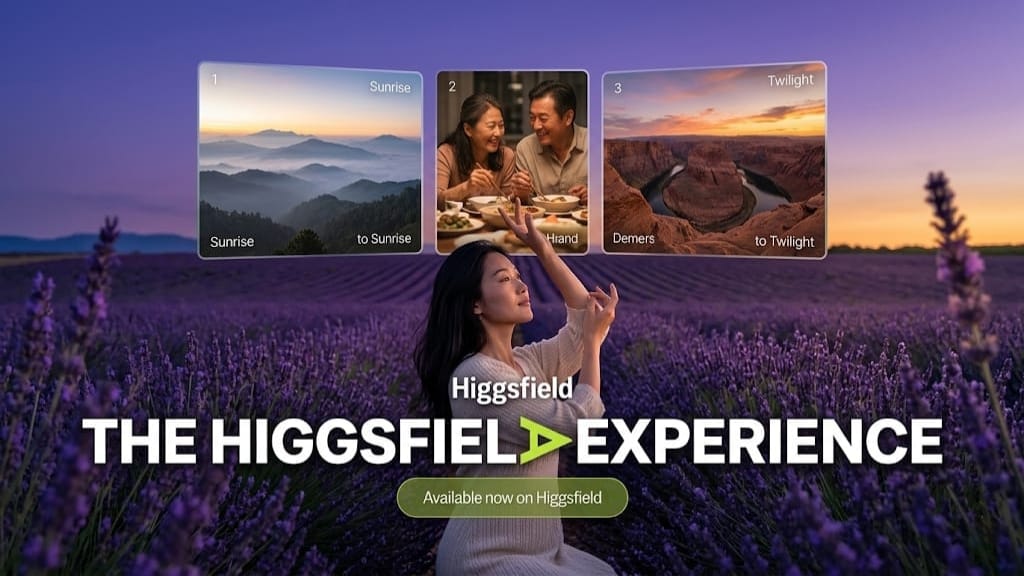
Higgsfield AI is an advanced AI platform designed to handle complex tasks with more flexibility and intelligence than traditional tools. Instead of focusing on just one function like writing or image generation, it aims to combine multiple AI capabilities into a unified system.
Think of it as a smarter layer on top of existing AI technologies. It focuses on understanding context, improving decision-making, and adapting to different use cases.
The Shift Toward Advanced AI Innovation
Before we understand why Higgsfield AI matters, it helps to look at how AI is evolving.
From Single-Task AI to Multi-Functional Systems
Earlier AI tools were built for specific tasks:
- Writing content
- Generating images
- Automating customer support
Now, the demand is for systems that can do all of this together. Businesses and creators want tools that can think, adapt, and respond across different scenarios.
This is where advanced AI innovation comes in.
Why Higgsfield AI Stands Out
1. Context-Aware Intelligence
Most AI tools follow commands. Higgsfield AI goes a step further by understanding context more deeply.
For example:
- It can analyze user intent, not just keywords
- It adjusts outputs based on previous interactions
- It learns patterns over time
This makes the results feel more natural and less robotic.
2. Integration of Multiple AI Capabilities
One of the biggest strengths of Higgsfield AI is its ability to combine different AI functions into one system.
Instead of switching between tools, you can:
- Generate content
- Analyze data
- Automate workflows
- Make predictions
All in one place.
This kind of integration is a big step forward in advanced AI tools.
3. Real-World Problem Solving
Many AI platforms look impressive but struggle with real-world applications. Higgsfield AI focuses more on practical use.
It can be used for:
- Business automation
- Marketing strategy support
- Data-driven decision-making
- Workflow optimization
This makes it more useful for professionals, not just tech enthusiasts.
4. Adaptability Across Industries
Another reason Higgsfield AI is shaping the future is its flexibility.
It works across multiple industries:
- Digital marketing
- Finance
- Healthcare
- E-commerce
Instead of building separate tools for each industry, it adapts to different needs. That’s a key part of advanced AI innovation
5. Improved Efficiency and Productivity
From my observation, one of the greatest benefits of tools like Higgsfield AI is how much time they save.
Tasks that used to take hours can now be done in minutes:
- Research
- Content creation
- Data analysis
But more importantly, it doesn’t just speed things up. It improves the quality of output.
How Higgsfield AI is Shaping the Future
Smarter Automation
Automation is no longer just about repetitive tasks. With Higgsfield AI, automation becomes smarter and more strategic.
It can:
- Make suggestions
- Predict outcomes
- Optimize decisions
This moves AI from being a helper to being a partner.
Better Human-AI Collaboration
The future of AI is not about replacing humans. It’s about working alongside them.
Higgsfield AI supports this by:
- Providing insights instead of just answers
- Allowing users to guide and refine outputs
- Enhancing creativity rather than limiting it
Continuous Learning and Improvement
Advanced AI systems need to evolve constantly. Higgsfield AI is designed to learn from data and interactions, which means it gets better over time.
This is critical for staying relevant in a fast-changing digital environment.
Challenges to Consider
While Higgsfield AI shows strong potential, it’s not perfect.
Some challenges include:
- Learning curve for new users
- Dependence on data quality
- Ethical concerns around AI decision-making
These are common across most advanced AI tools, not just this platform.
Who Should Use Higgsfield AI?
Higgsfield AI is especially useful for:
- Marketers looking to scale campaigns
- Business owners wanting automation
- Content creators managing multiple tasks
- Analysts working with large data sets
If your work involves decision-making, content, or efficiency, this kind of AI can add real value.

FAQ: Higgs Field AI and Advanced AI Innovation
1. What makes Higgsfield AI different from other AI tools?
Higgsfield AI focuses on combining multiple AI capabilities into one system, with stronger context understanding and adaptability.
2. Is Higgsfield AI suitable for beginners?
Yes, but there may be a slight learning curve. Once you understand how it works, it becomes easier to use.
3. Can Higgsfield AI replace human work?
No. It is designed to assist and enhance human work, not replace it completely.
4. What industries can benefit from Higgsfield AI?
It can be used in marketing, finance, healthcare, e-commerce, and more due to its flexible design.
5. Does Higgsfield AI improve productivity?
Yes. It helps automate tasks, reduce manual work, and improve the quality of outputs.
6. Is Higgsfield AI part of the future of AI innovation?
Yes. Its ability to combine intelligence, adaptability, and real-world usability makes it a strong example of advanced AI innovation.
Conclusion
Higgsfield AI represents a clear shift in how artificial intelligence is being developed and used. It moves beyond simple automation and focuses on smarter, more adaptive systems that can handle real-world challenges.
What stands out is not just its features but how it brings everything together in a practical way. As AI continues to evolve, platforms like Higgsfield AI are likely to play a key role in shaping the next phase of advanced AI innovation.
If you’re looking to understand where AI is heading, this area is definitely a space worth paying attention to.